
the story of gin
From a juniper medicine to the gin and tonic, in short.
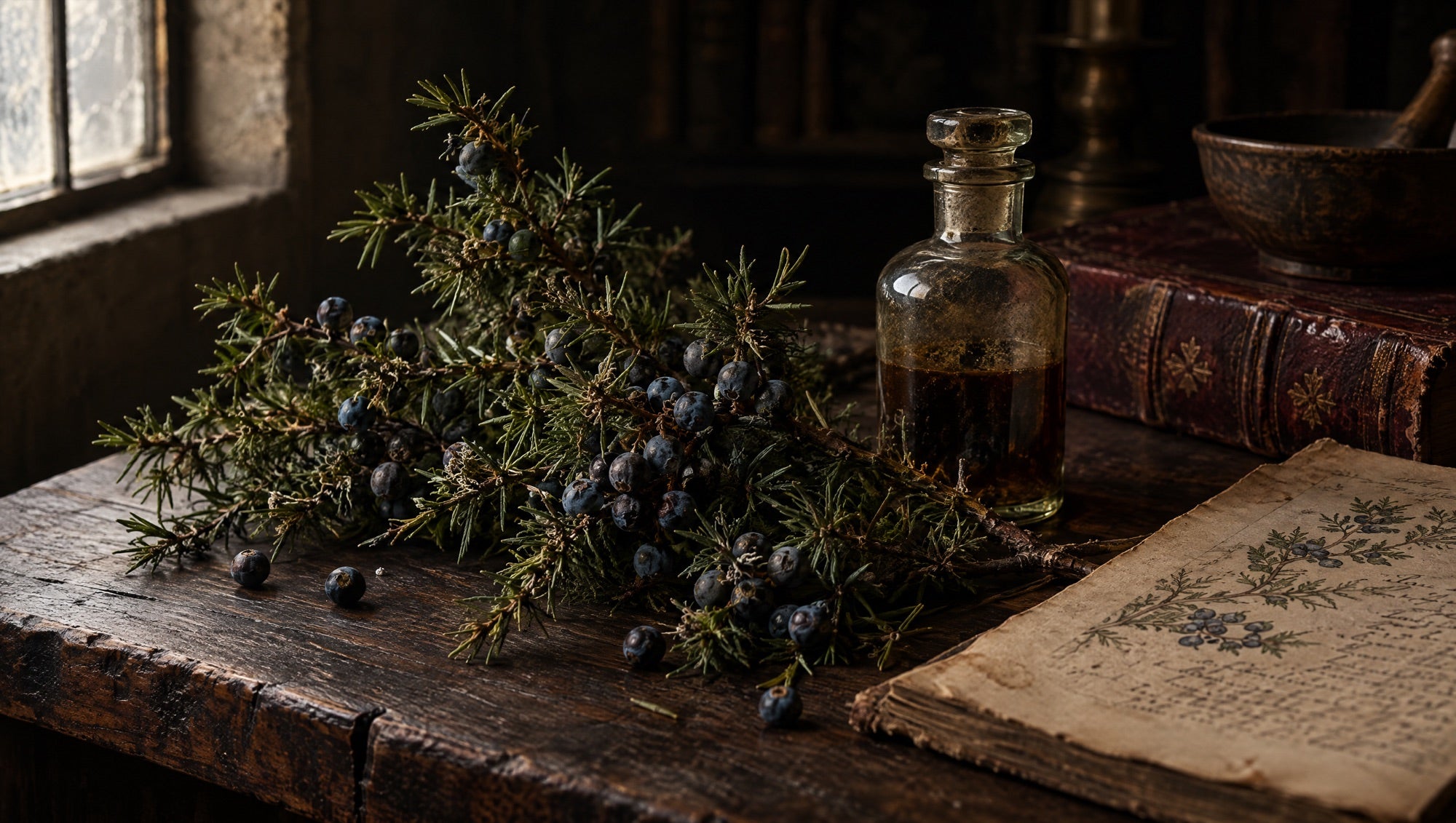
four hundred years in short
-
1500s–1600s
juniper as medicine
Monks and apothecaries across Europe distilled spirits with juniper berries and sold them as remedies. In the Low Countries this became genever, a malty juniper spirit.
-
1600s
dutch courage
English soldiers fighting in the Low Countries met genever there and brought a taste for it home. The nickname “Dutch courage” is said to come from this time.
-
1689
gin comes to london
When William of Orange became king of England, French brandy was taxed heavily and distilling at home was encouraged. Genever, shortened to gin, took off.
-
1720–1751
the gin craze
London was flooded with cheap, often very poor gin. A series of Gin Acts, ending with the Gin Act of 1751, brought it under control.
-
1830s
london dry
The new column still made a cleaner, purer spirit, and a lighter, drier style of gin followed, flavoured only during distillation. Today London Dry is a style, not a place.
-
1850s
the gin and tonic
In British India, tonic water with quinine was drunk against malaria. Gin made it easier to drink, and the gin and tonic was born.
-
2000s
the craft renaissance
Small distillers began to experiment with local botanicals and new flavours. Fenrir is part of that story, made on Bornholm.
five styles of gin
Every gin is built on juniper. What happens around it decides the style.
- london dry
- Crisp and dry, with juniper up front. All flavour comes from distillation; nothing is added afterwards except water.
- plymouth
- A style from the English port of Plymouth: a little less dry and softer, with an earthy depth.
- old tom
- Lightly sweetened, from 18th-century London. The gin behind the original Tom Collins.
- genever
- The Dutch ancestor of gin. Malty and rounded, closer to a light whisky.
- contemporary
- Juniper takes a step back and other botanicals lead, from citrus and fruit to flowers and spice.
where fenrir fits
Fenrir keeps juniper and coriander at its core, like a classic gin, and lets pomegranate and orange lead the flavour, with cinnamon, nutmeg and pink pepper for warmth. It sits between the classic and the contemporary.